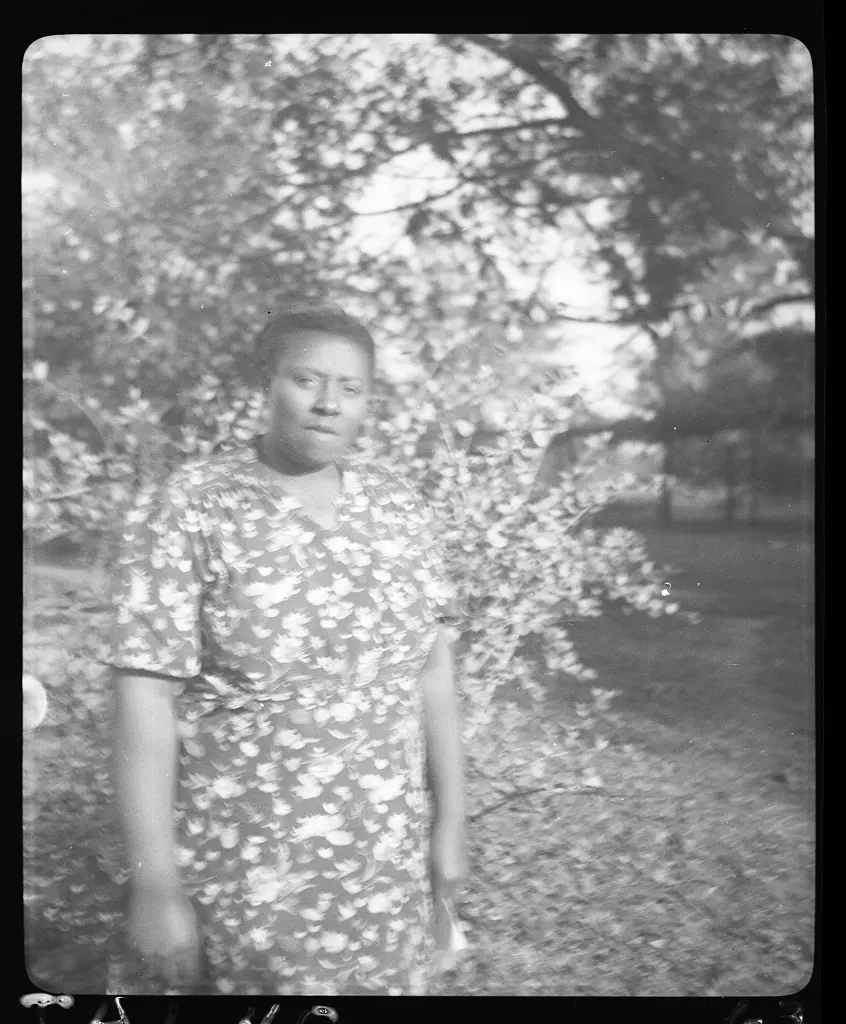
Alabama
This was the Lomaxes' second visit to Livingston, Alabama whereupon their friend Mrs. Ruby Pickens Tartt became their chief assistant and guide. In the few days that they were working around Livingston she drove her car nearly two hundred miles, looking up singers, and bringing them to the microphone, from far and near, over hill, over dale, through mud and stream. Tartt had the confidence of the community including the African-Americans whom she never refused help.
Doc Reed and Vera Hall, cousins who had sung together for many years, were Tartt's dependables and good singers of the old style spirituals, perfect in "seconding"- "following after" they called it,- and they knew many songs. Not having book-learning they stored in the back of their heads innumerable tunes and stanzas, and if they do not understand completely the text, they are ingenious in supplying substitutes either from other spirituals or from their own feelings of the moment. They, however, did not substitute jargon; their texts meant something, if not always what the original words meant. Few of the substantial number of recordings the both made include ► Job, Job', ► Climbin' up de Hill o' Mt. Zion' and ► Po' Sinner, Farewell'
While Vera Hall seemed to be as devout a Christian as Doc Reed, her cousin, and sang the old spirituals with as much sincerity and feeling, yet she did not refuse to sing secular songs. If she heard a song sung through once or twice, she could sing it again herself, with a variation or two of her own, always an improvement. This time the Lomaxes asked her for playparty or game or other children's songs. "It's been a long time" she hesitated. Then she smiled, "We used to sing ► All hid?. May be I can put it together." Looking about her as if she thought that Mrs. Tartt's yard would be a very good place to find hiding-places, she started off. With this song her mind had slipped back into its play groove, and Vera, at this one sitting, gave the Lomaxes five more children's songs: ► Come up, Horsey, ► Rosey, ► Carrie, ► Little girl, yes ma'am, ► Candy gal, and ► Hold the Gates
It was Sunday, May 29, 1939 and the Lomaxes had started out to Doc Reed's church for services. Mrs. Tartt suggested that they all stop at Aunt Caroline Horne's house off in the cotton patch a half mile or so from the road. There we found Hornse, two daughters, Frances and Aurilla, a son, Jim (Duck), some other friends of the family and a bunch of "grands". It was a giggly group, the boys given to wise-cracking. It started raining at about this time and the Lomaxes setup their machine and batteries on the porch. Finally one of the daughters suggested a church song, ► I Got to Stand There by Myself, which she and her mother sang. Then the two daughters recorded another spiritual ► All My Sins Been Taken Away. Aunt Caroline recalled and sang the children's song ► Little Red Bird in the tree. The Lomaxes, feeling they had overstayed their time, recorded a couple other songs and left after the rain had "let up a bit".
It started raining heavily again, however, as they made their way to the church to which they had started. Mrs. Tartt, driving ahead of the Lomaxes to show them the way, would not turn back even though they passed two cars in the ditch, until at the top of another long red-clay hill where the road curved at the top, her car not only took the curve but made a complete circle and stood facing homeward. Then at last she consented to go back. On their way back they stopped at the Johnson Place Baptist Church in which they found the preacher holding forth on Moses. After about fifteen minutes he said, "I can't fool around with Moses all day, I must pass on to Jesus." When he stopped at two-thirty the Lomaxes set up their machine and caught some "mournin" songs such as ► Nobody's Fault But Mine.
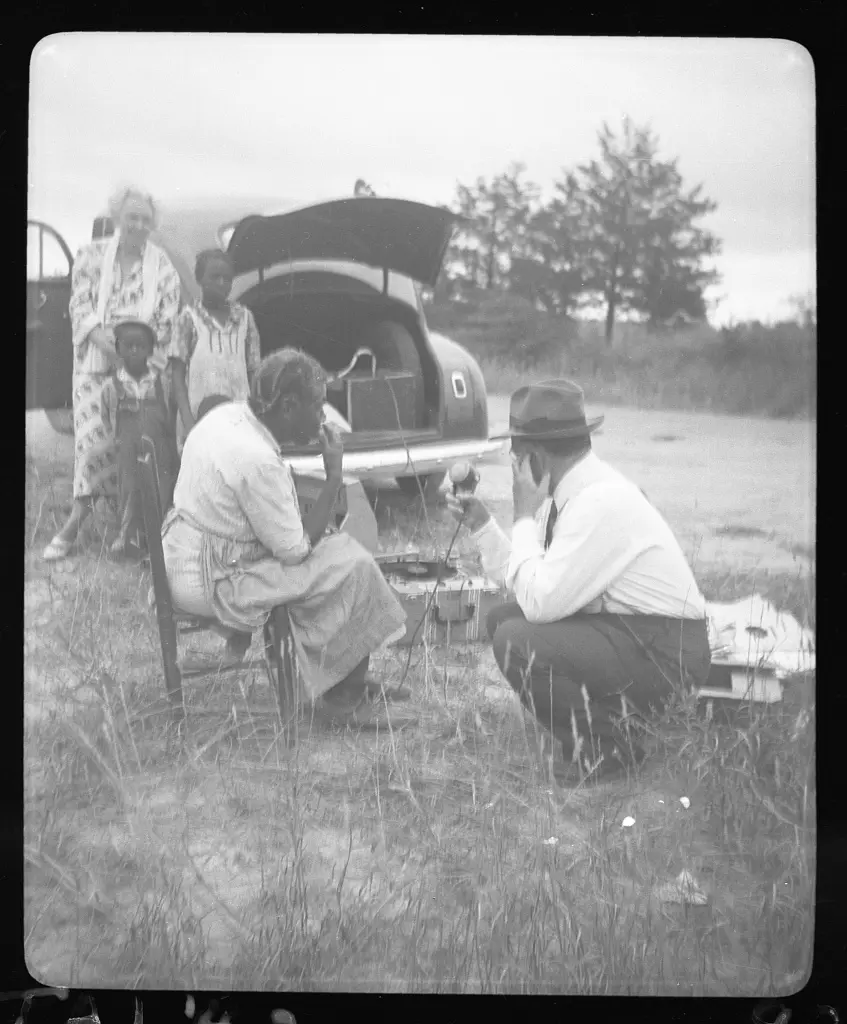
As they were leaving Johnson Place Church, Mrs. Tartt caught sight of Jeff Horton who worked on the Johnson place and who knows many reels and play party songs. When she went to interview him she found him very drunk. He had the reputation of being a hard worker during the week and a hard drinker at week ends and could do nothing that day but promised to come into town to Mrs. Tartts's home the next day. Indeed, the next day up strolled Jeff. "It was hard work", he asserted, "to keep my word, but I wrastled wid it an' got it to come thro". With him were two friends, Ben Donner and Robert Chapman, each of whom sang a song.
The same day the Lomaxes recorded ► Give Me a Gourd o' Cold Water from Aunt Florida, who after singin' spirituals started on a "reel", but, breaking off in the middle, began to explain how she could not go on in "sech sin"
"I told de Lord that I wouldn't sin no more. Course de Lord he know I gwine sin some mo', I jes' couldn't hep sinning a little, but He know too I aint 'bleeged to sin by singin' no reels. See dem clouds? Dey's jes' a-gatherin' this minute to send fo'th de Lord's light'nin' an' strike me down. An' Miss Ruby (Mrs. Tartt) you done sin agin de Lord, too, for 'suadin' me into singin' dis reel". In reality it was no more than a ring-game song. The machine was going and as a result we have a dandy introduction to a chapter on Negro secular songs. 1939 Southern Recording Trip Fieldnotes
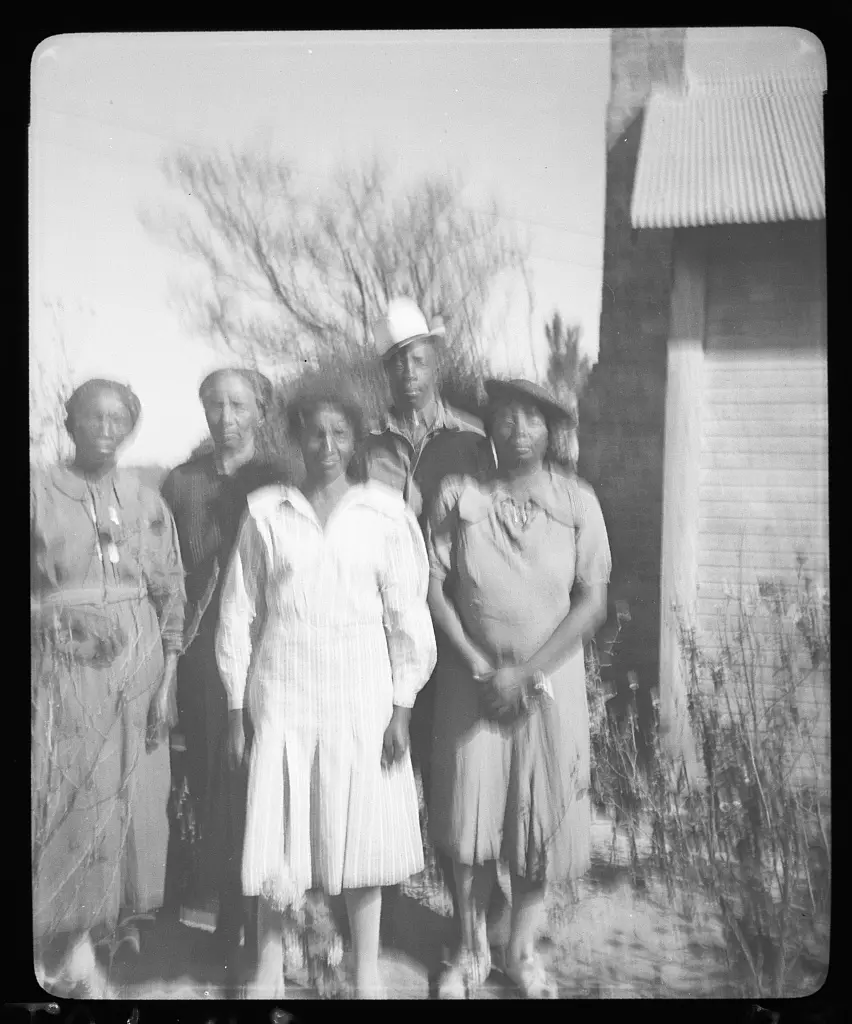
Mrs. Tartt had told the Lomaxes about the Tartt family of African-Americans that lived in the Boyd, Alabama community. She said that she had heard the group sing together with beautiful effect, and she believed that because of the rain they would not be working in the field so she drove the seventeen miles or more to their farm home to bring them back into her home to sing. She was told at their house that "Sim an' them is huntin' fish". Mrs. Tartt walked through the mud down to the river, calling as she went, to locate them. Finally she heard a startled whisper, "Dat's Miss Ruby Callin'! Hear her? Reckin what she want?" Then Mrs. Tartt, "Sim, Mandy, you heard me. Where are you?" They came forth, bare-footed and thinly clad for they really had been fish-hunting. The high water, receding, had left live fish far up on the bank and they were spearing and catching them with their bare hands. But at Mrs. Tartt's bidding, they left the river, hastily made themselves reddy and were on their way. Every foot of the long, winding, still-muddy road they sang spirituals, some of them new even to Mrs. Tartt, who thought that she had exhausted their repertoire. Besides spirituals such as ► What You Gonna Do When This World's on Fire and ► Down On Me, they recorded a few game songs such as ► All the Way Round
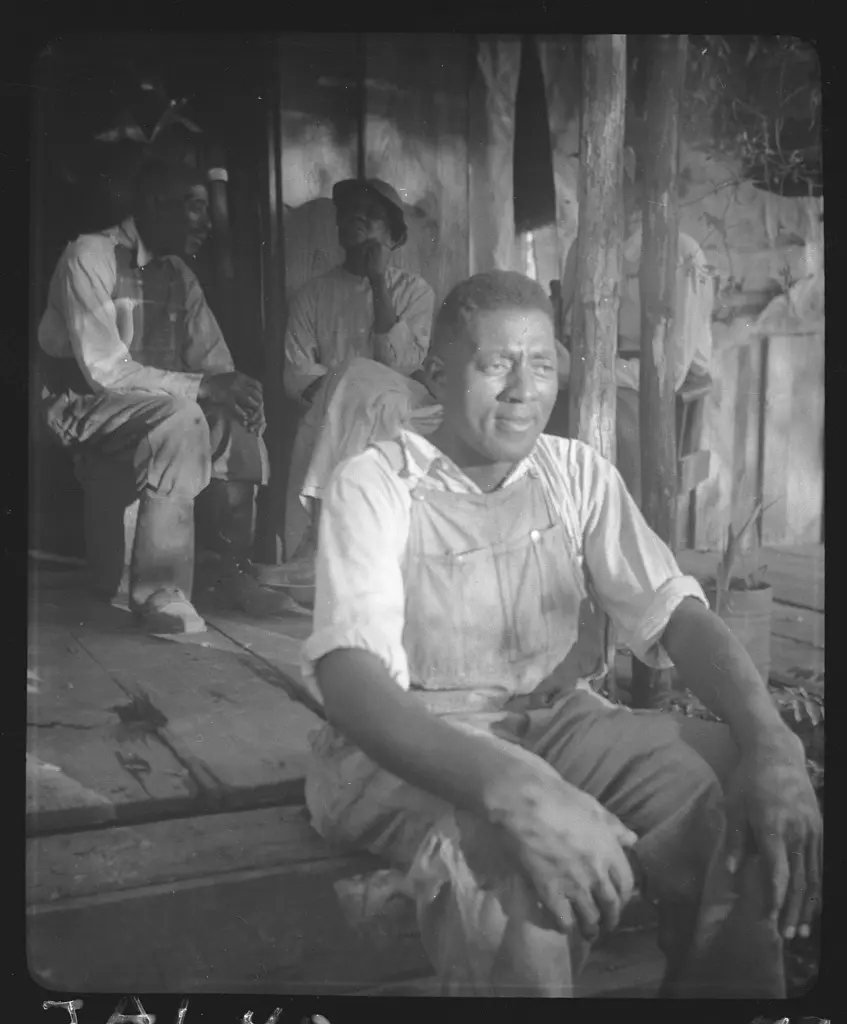
Seven miles out from Livingston, just off the Demopolis highway, the Lomaxes found the McDonald family in a farm home, unpainted but neat, with flowers in the yard and a vegetable garden hearby. Uncle Joe McDonald had finished his afternoon nap, had hitched his mule to the plow and was ready to start an afternoon's work. But Mrs. Tartt and his curiosity persuaded him to postpone the work. The Lomaxes set the machine up in the bedroom; Aunt Molly and Uncle Joe perched themselves in the cornerron the rounded top of a hair-covered trunk. It was evidently used often for a settee, as it had a scarf on top of it and a rug in front. Jim and Janie, their children, stood behind the trunk when they helped with the songs. Aunt Molly was the principal performer. She was in good humor, although she claimed to have a cold, and she laughed gleefully, joking with John Lomax and Mrs. Tartt as well as "ribbing" her husband, Uncle Joe.
They had been "raised with white folks" and from them learned some of their songs. They had had the reputation of being good songsters, and probably good clowns, and were often invited by their "white folks" to entertain guests. 1939 Southern Recording Trip Fieldnotes
Their repertoire was extensive, and, although Mrs. Tartt had interviewed them several times and had made a long, list of their songs, they sang some that afternoon that she had never heard. Much time was spent getting the many play party and game songs the McDonalds knew, such as ► Old Molly Hare, ► Rena, Big-Foot Rena and ► When I Was a Young Girl
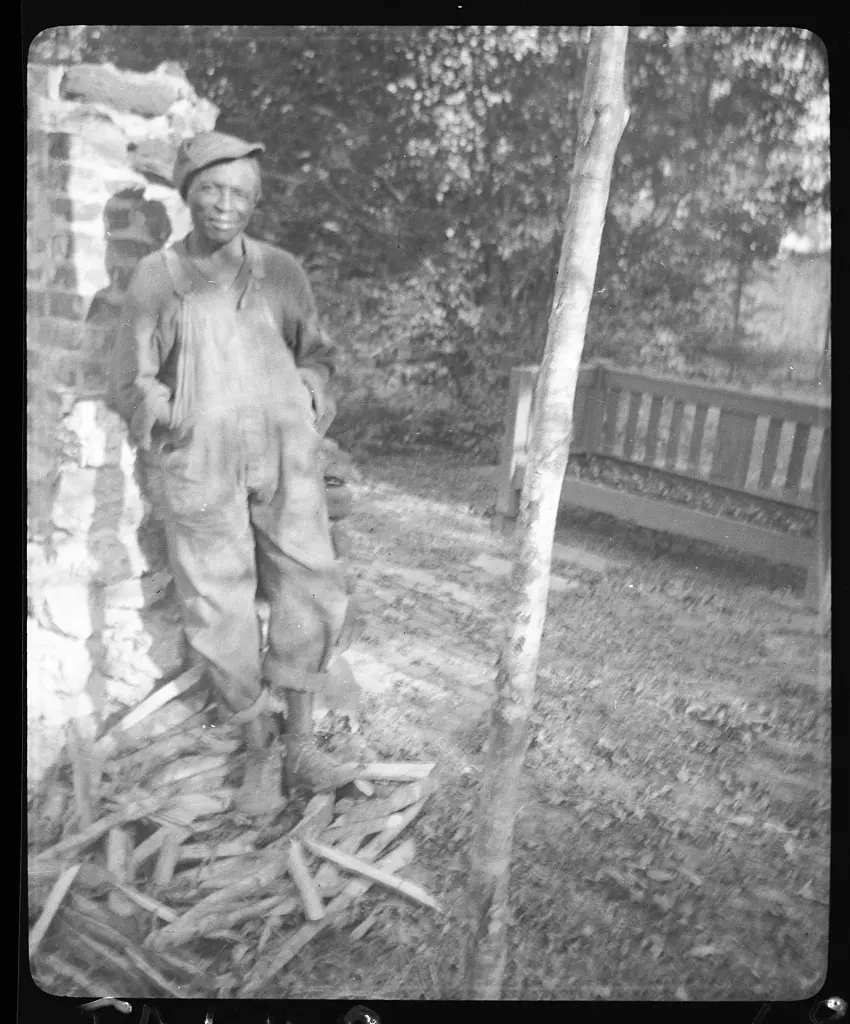
"There's ole Enoch", Doc Reed said as he sat on Mrs. Tartt's back "gallery" ready to sing. The Lomaxes listened to the "hollerin"' though they thought it was too harsh a word for such rounded-tones. Enoch Brown was crossing the bridge over the Sacarnatchie that ran at the foot of Baldwin Hill, and was artist enough to know that from just there his calls would sound most effective. It was a sort of "hallo-ing", demonstrated on ► Levee Holler, perhaps a form of yodeling though the words were those of field songs, with always a weird lonesomeness that the Lomaxes could never quite get the effect of into their microphone. Usually Brown would call "oh-oh-oo-oo, I won't be here long", with variations on that theme.
Enoch is a strange person, the kind of person that we are tempted to call "a strange creature", for he seems "other-worldly", a wraith that appears suddenly out of darkness- we have never seen him in daytime in two visits- His sentences in conversation are condensed. "He come?", when expanded means "Has Mr. Lomax arrived?" If the answer is "No", Enoch turns away with a mere "Back again". His laugh, too, is not of this earth. Enoch's clothing consist mostly of rags pinned together; he does not keep himself clean; he works only when he is hungry, and not then if he has some excuse to walk up the hill to Mra. Tartt's home about mealtime. He ought to be repulsive, but he isn't; rather, he stirs deeply the pools of tenderness in the heart. 1939 Southern Recording Trip Fieldnotes